
Small Rockets, 2001
Small Rockets was a small studio in Guildford, England. Its founders had come out of Criterion Software, the company behind the RenderWare engine, and Small Rockets' games ran on an in-house engine with RenderWare 3 doing the 3D work: the same engine generation that would soon power some of the biggest games of the decade.
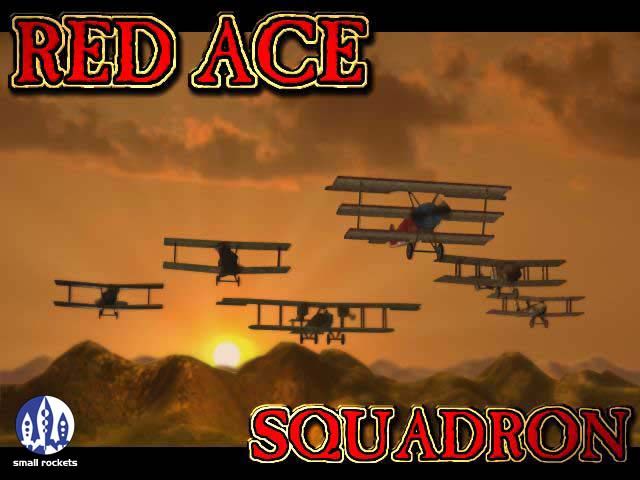
The studio's bet was ahead of its time: modest, polished games sold directly over the internet, at a moment when almost everything else came in a box. Red Ace Squadron arrived in December 2001 at $19.99, a WWI dogfighter built on a simple conviction: that the purest fun in flight games is a biplane, a mouse, and somebody on your tail. A US retail release followed in 2002 through Global Star Software, and an expanded Red Ace Squadron Pro arrived in 2005, free to owners of the original, with ideas contributed by the game's own community.
The long quiet
For years the multiplayer squadrons flew nightly, matched together by GameSpy, the service that connected half the PC games of that era. Then GameSpy shut down in 2014 and the lobbies went dark. Modern Windows treated the aging engine no more kindly: crashes, no widescreen, a stubborn freeze. Small Rockets itself had closed in August 2012 with a farewell letter to its players that thanked its community veterans by name and admitted the sequel would never come:
“All good things must eventually come to an end.”
The game never quite died, though. It lived on in memories of first PCs and family computers, on abandonware sites, in forum threads asking how to make it run on Windows 10, and on wishlists asking someone, anyone, to bring it back.
The restoration
The Definitive Edition is that answer: a community restoration project undertaken with the blessing of one of the original developers. The work is restoration in the truest sense. The 2001 game is preserved at its core, its physics and missions untouched, while everything around it was carefully rebuilt:
- True 2560×1440 widescreen for gameplay and menus, recovered through reverse engineering of the original engine
- All 64 interface screens repainted by hand in a 1917 officers'-club style
- Terrain textures restored at four times their original resolution across all three worlds
- The infamous crash-freeze diagnosed at the binary level and permanently fixed
- Online multiplayer re-routed through Epic Online Services without touching a byte of the original client
The engine, for the curious
Red Ace Squadron was built on Criterion Software's RenderWare 3, the same generation of engine that powered Grand Theft Auto III and Burnout. That heritage is one reason the restoration was possible at all: the file formats and rendering behavior of that era are well understood, and the project's engineers documented the game's own engine byte by byte to bring widescreen and modern compatibility to a binary that shipped before Windows XP.
RenderWare is a trademark of Criterion Software Ltd., an Electronic Arts company. Red Ace Squadron: Definitive Edition is an independent community restoration, distributed with the permission of one of the original developers, and is not affiliated with, sponsored, or endorsed by Criterion Software or Electronic Arts.
The original crew
As credited by the game itself:
Red Ace Squadron
- Programming
- Tim Aidley, Marcus Lynn, Jon Askew, Dave Hodder
- Original idea
- Tim Aidley
- Art
- Anthony Callaghan, Paul Boulden
- Sound
- Richard Beddow
- Level design
- Rob Heald
- Producer
- Pete Lane
- Dive6 libraries
- Jonathan Small
Red Ace Squadron Pro
- Original idea
- David DeLay, RAS Community
- Testing/Quality control
- RAS2 test team
- Support
- Sean Baggaley
- Programming
- Jonathan Small
Timeline
- 2000 Master of the Skies: The Red Ace
Small Rockets' first WWI flyer sets the theme.
- December 2001 Red Ace Squadron ships
Sold by direct download at $19.99, years before digital distribution was the norm.
- 2002 US retail release
Boxed for American shelves by Global Star Software.
- 2005 Red Ace Squadron Pro
The expanded edition, free to owners, shaped by community ideas.
- August 2012 Small Rockets' farewell
The studio closes with a letter thanking its players and community veterans by name.
- 2014 GameSpy shuts down
Online multiplayer goes dark, for this game and hundreds of others.
- 2026 The Definitive Edition
Restored for Windows 11 with the blessing of one of the original developers. The aces fly again.